Your Tool Shop and the R&D Tax Credit: What Counts as Research on Your Shop Floor?

When we say tool shop, we mean tool and die shops, mold makers, fixture builders, and custom machine shops that build the tooling other manufacturers use to make their parts. If your business fits into any of these categories, your team may be working toward solving technical problems every day, which means your business may qualify for the R&D tax credit.
Why a Tool Shop R&D Tax Credit Claim Is Possible
Many shop owners don’t even know the R&D tax credit exists, and if they do, they sometimes rule themselves out based on the industry they’re classified as. IRC §41 does not reward by industry, however; it rewards the activity that’s working toward solving a problem. The Treasury Regulations contain three points that reinforce this:
• You can use existing technology. The regulations let you rely on existing principles of engineering and the physical sciences. You do not need to invent new physics (Treas. Reg. §1.41-4(a)(4)).
• You do not need to know more than other toolmakers. The research does not have to exceed or expand the common knowledge of skilled professionals in your field (Treas. Reg. §1.41-4(a)(3)(ii)).
• The new design does not have to work. The regulations do not require you to succeed in developing the new or improved component (Treas. Reg. §1.41-4(a)(3)(ii)).
The uncertainty can sit in the design alone. A toolmaker may know how to cut tool steel, but the toolmaker may not know the correct die geometry for a new material, or the right fixture design to hold a thin-walled part within tolerance. The regulations say a process of experimentation can apply when your capability and method are certain but the appropriate design is not (Treas. Reg. §1.41-4(a)(5)(i)).
The Four-Part Test in Shop Terms
Each activity much meet all four parts of the test, and IRS applies the test to one business component at a time.
• Permitted Purpose: The activity must be intended to develop or improve the functionality, performance, reliability, or quality of a business component.
• Technological in Nature: The work must rely on engineering, physical or biological science, or computer science principles.
• Technical Uncertainty: The activity must be undertaken to discover information intended to eliminate uncertainty about the capability, method, or appropriate design of the business component.
• Process of Experimentation: Your team must have a process that evaluates alternatives through modeling, simulation, systematic trial and error, or other methods to eliminate uncertainty.
The business component refers to the thing you are developing or improving. It can be product, process, computer software, technique, formula, or invention that you hold for sale, lease, or license, or use in your own business. In a tool shop, that may be a die you build for a customer, a fixture you build for your own floor, or a new machining process. The regulations treat a product and a process that makes it as separate business components, so each one must pass on its own.
The test also has a numbers requirement. At least 80 percent of your research activities on a business component, measured on cost or another consistently applied reasonable basis, must be elements of experimentation. If a job falls short, the shrinking-back rule lets you test a smaller piece of it, such as the new strip layout on a progressive die.
Tool Shop Work That May Qualify
Activities performed in a tool shop that may qualify for the R&D tax credit include:
• Designing a die, mold, or fixture when the correct design is uncertain, then comparing alternatives through simulation or documented trials.
• Developing a machining process for a difficult materials or tight tolerance, where you test cutter geometries, tool paths, workholding, or process sequences against a defined result.
• Building prototype tooling to compare designs before one meets your functional requirements.
• Modifying purchased equipment to it can perform a function that the standard version cannot.
Work That Usually Does Not Qualify
Knowing what doesn’t qualify is, of course, just as important as knowing what generally does. Some examples include:
• Tooling up and trial production runs. The credit excludes research after commercial production begins. Preproduction planning, tooling up for production, trial production runs, troubleshooting production equipment, accumulating production data, and debugging flaws are all examples of activities that happen after commercial production.
• Adapting an existing design to a customer’s requirement. The credit excludes this work, but it should be noted that custom doesn’t disqualify you. Adapting something that already exists without uncertainty about the end product will.
• Copying from plans or prints. Reproducing an existing component from a physical examination, plans, blueprints, or detailed specifications, as build-to-print work usually gives you no design uncertainty to solve.
• Routine testing and inspection. Ordinary testing or inspection for quality control does not aim to solve technical uncertainty and is therefore considered routine work.
Customer Contracts
Job shops work under customer agreements, and those agreements’ terms can affect the credit. It does not cover research to the extent another person funds it, and the analysis can be framed around two questions:
1. Does the customer pay regardless of the outcome?
2. Do you keep substantial rights in the results?
A “no” to either of these questions means that research counts as funded. If you perform research on behalf of another person and keep no substantial rights, you cannot count any part of that research.
Which Costs Count
Qualified research expenses fall into three buckets under IRC §41(b): wages, supplies, and contract research.
Wages
Wages count to the extent that employees perform, directly supervise, or directly support qualified research. The IRS will look at what an employee does, not a title. If an employee splits time, the default method is to multiple total wages by the share of time spent on qualified services. If at least 80 percent of an employee’s wages go to qualified services, all of that employee’s wages count.
Supplies
A supply is tangible property other than land or improvements to land, and other than property subject to depreciation. Raw tool steel or stock consumed while building a prototype may fit, while your machines, depreciable tooling, machine-hour rates, and overhead do not.
Contract Research
If you send work to an outside provider during a qualifying project, 65 percent of what you pay may count toward the credit. The work must be qualified research or a service that would count as qualified if your own employees performed it. The agreement must exist before the work begins, it must happen on your behalf, and you must bear the cost regardless of outcome.
What Kind of Documentation Do You Need?
The credit will require that you have documentation to substantiate your R&D tax credit claim, though it doesn’t necessarily mean it needs to be overly technical and scientific. It also important that you tie each activity to a specific component and not lump everything into a single broad category.
Most shops already generate a good amount of useful evidence for documentation:
• The RFQ, drawings, or job notes that show what you were working toward, or what you did not know at the beginning of the project.
• CAD revision history and simulation runs that show the alternatives you compared.
• Tryout and test logs with dates, settings, and results.
• Scrap and rework data that explain why a design required change.
• Time records by employee and job number, even informal ones.
• Purchase records that tie materials to the job.
• The customer agreement for the job.
Frequently Asked Questions
Can a tool and die shop qualify for the R&D tax credit?
Yes, if specific projects meet the four-part test. Your industry label doesn’t mean anything to the credit – the facts of each job do.
Does custom work for a customer qualify?
It can. Custom work that involves real design uncertainty and a process of experimentation may, subject to the funded research rules in your customer contract, but simple adaptation with no uncertainty about the final product generally does not.
Do build-to-print jobs qualify?
Usually not. When the design is settled and you know the method, there is no technical uncertainty to resolve.
Can we count machinists’ wages?
Possibly. If the machinist is just working on daily, routine production, no. If they’re performing, directly supervising, or directly supporting qualified research, yes.
Can we count steel and other materials?
It depends. Tangible, non-depreciable property used in qualified services can count as a supply. Machines, depreciable tooling and overhead cannot.
We never tracked time by job. Are we still able to claim?
Probably. If you have time records, you can still use them to substantiate your credit claim. Making arbitrary guesses are more likely to invite scrutiny, but time cards that can be tied to certain projects will help.
How RK Partners Approaches R&D Tax Credits
Tool shop claims turn on details. Which jobs involved uncertainty, which ended once the design met your requirements, and what the customer contract says about funding. RK Partners works with founders, CFOs, and CPAs to sort that out job by job, identify business components, and build documentation that connects each dollar to the qualifying work. Our tax attorneys, CPAs, and engineers have deep experience compiling studies, and they know what to ask and how to find it so that your team’s time investment is minimal. If you’re doing work you think may qualify, give us a call. It’s risk-free, but leaving credits on the table is a risk.
Your Tool Shop and the R&D Tax Credit: What Counts as Research on Your Shop Floor?
When we say tool shop, we mean tool and die shops, mold makers, fixture builders, and custom machine shops that build the tooling other manufacturers use to make their parts. If your business fits into any of these categories, your team may be working toward solving technical problems every day, which means your business may qualify for the R&D tax credit.
Why a Tool Shop R&D Tax Credit Claim Is Possible
Many shop owners don’t even know the R&D tax credit exists, and if they do, they sometimes rule themselves out based on the industry they’re classified as. IRC §41 does not reward by industry, however; it rewards the activity that’s working toward solving a problem. The Treasury Regulations contain three points that reinforce this:
• You can use existing technology. The regulations let you rely on existing principles of engineering and the physical sciences. You do not need to invent new physics (Treas. Reg. §1.41-4(a)(4)).
• You do not need to know more than other toolmakers. The research does not have to exceed or expand the common knowledge of skilled professionals in your field (Treas. Reg. §1.41-4(a)(3)(ii)).
• The new design does not have to work. The regulations do not require you to succeed in developing the new or improved component (Treas. Reg. §1.41-4(a)(3)(ii)).
The uncertainty can sit in the design alone. A toolmaker may know how to cut tool steel, but the toolmaker may not know the correct die geometry for a new material, or the right fixture design to hold a thin-walled part within tolerance. The regulations say a process of experimentation can apply when your capability and method are certain but the appropriate design is not (Treas. Reg. §1.41-4(a)(5)(i)).
The Four-Part Test in Shop Terms
Each activity much meet all four parts of the test, and IRS applies the test to one business component at a time.
• Permitted Purpose: The activity must be intended to develop or improve the functionality, performance, reliability, or quality of a business component.
• Technological in Nature: The work must rely on engineering, physical or biological science, or computer science principles.
• Technical Uncertainty: The activity must be undertaken to discover information intended to eliminate uncertainty about the capability, method, or appropriate design of the business component.
• Process of Experimentation: Your team must have a process that evaluates alternatives through modeling, simulation, systematic trial and error, or other methods to eliminate uncertainty.
The business component refers to the thing you are developing or improving. It can be product, process, computer software, technique, formula, or invention that you hold for sale, lease, or license, or use in your own business. In a tool shop, that may be a die you build for a customer, a fixture you build for your own floor, or a new machining process. The regulations treat a product and a process that makes it as separate business components, so each one must pass on its own.
The test also has a numbers requirement. At least 80 percent of your research activities on a business component, measured on cost or another consistently applied reasonable basis, must be elements of experimentation. If a job falls short, the shrinking-back rule lets you test a smaller piece of it, such as the new strip layout on a progressive die.
Tool Shop Work That May Qualify
Activities performed in a tool shop that may qualify for the R&D tax credit include:
• Designing a die, mold, or fixture when the correct design is uncertain, then comparing alternatives through simulation or documented trials.
• Developing a machining process for a difficult materials or tight tolerance, where you test cutter geometries, tool paths, workholding, or process sequences against a defined result.
• Building prototype tooling to compare designs before one meets your functional requirements.
• Modifying purchased equipment to it can perform a function that the standard version cannot.
Work That Usually Does Not Qualify
Knowing what doesn’t qualify is, of course, just as important as knowing what generally does. Some examples include:
• Tooling up and trial production runs. The credit excludes research after commercial production begins. Preproduction planning, tooling up for production, trial production runs, troubleshooting production equipment, accumulating production data, and debugging flaws are all examples of activities that happen after commercial production.
• Adapting an existing design to a customer’s requirement. The credit excludes this work, but it should be noted that custom doesn’t disqualify you. Adapting something that already exists without uncertainty about the end product will.
• Copying from plans or prints. Reproducing an existing component from a physical examination, plans, blueprints, or detailed specifications, as build-to-print work usually gives you no design uncertainty to solve.
• Routine testing and inspection. Ordinary testing or inspection for quality control does not aim to solve technical uncertainty and is therefore considered routine work.
Customer Contracts
Job shops work under customer agreements, and those agreements’ terms can affect the credit. It does not cover research to the extent another person funds it, and the analysis can be framed around two questions:
1. Does the customer pay regardless of the outcome?
2. Do you keep substantial rights in the results?
A “no” to either of these questions means that research counts as funded. If you perform research on behalf of another person and keep no substantial rights, you cannot count any part of that research.
Which Costs Count
Qualified research expenses fall into three buckets under IRC §41(b): wages, supplies, and contract research.
Wages
Wages count to the extent that employees perform, directly supervise, or directly support qualified research. The IRS will look at what an employee does, not a title. If an employee splits time, the default method is to multiple total wages by the share of time spent on qualified services. If at least 80 percent of an employee’s wages go to qualified services, all of that employee’s wages count.
Supplies
A supply is tangible property other than land or improvements to land, and other than property subject to depreciation. Raw tool steel or stock consumed while building a prototype may fit, while your machines, depreciable tooling, machine-hour rates, and overhead do not.
Contract Research
If you send work to an outside provider during a qualifying project, 65 percent of what you pay may count toward the credit. The work must be qualified research or a service that would count as qualified if your own employees performed it. The agreement must exist before the work begins, it must happen on your behalf, and you must bear the cost regardless of outcome.
What Kind of Documentation Do You Need?
The credit will require that you have documentation to substantiate your R&D tax credit claim, though it doesn’t necessarily mean it needs to be overly technical and scientific. It also important that you tie each activity to a specific component and not lump everything into a single broad category.
Most shops already generate a good amount of useful evidence for documentation:
• The RFQ, drawings, or job notes that show what you were working toward, or what you did not know at the beginning of the project.
• CAD revision history and simulation runs that show the alternatives you compared.
• Tryout and test logs with dates, settings, and results.
• Scrap and rework data that explain why a design required change.
• Time records by employee and job number, even informal ones.
• Purchase records that tie materials to the job.
• The customer agreement for the job.
Frequently Asked Questions
Can a tool and die shop qualify for the R&D tax credit?
Yes, if specific projects meet the four-part test. Your industry label doesn’t mean anything to the credit – the facts of each job do.
Does custom work for a customer qualify?
It can. Custom work that involves real design uncertainty and a process of experimentation may, subject to the funded research rules in your customer contract, but simple adaptation with no uncertainty about the final product generally does not.
Do build-to-print jobs qualify?
Usually not. When the design is settled and you know the method, there is no technical uncertainty to resolve.
Can we count machinists’ wages?
Possibly. If the machinist is just working on daily, routine production, no. If they’re performing, directly supervising, or directly supporting qualified research, yes.
Can we count steel and other materials?
It depends. Tangible, non-depreciable property used in qualified services can count as a supply. Machines, depreciable tooling and overhead cannot.
We never tracked time by job. Are we still able to claim?
Probably. If you have time records, you can still use them to substantiate your credit claim. Making arbitrary guesses are more likely to invite scrutiny, but time cards that can be tied to certain projects will help.
How RK Partners Approaches R&D Tax Credits
Tool shop claims turn on details. Which jobs involved uncertainty, which ended once the design met your requirements, and what the customer contract says about funding. RK Partners works with founders, CFOs, and CPAs to sort that out job by job, identify business components, and build documentation that connects each dollar to the qualifying work. Our tax attorneys, CPAs, and engineers have deep experience compiling studies, and they know what to ask and how to find it so that your team’s time investment is minimal. If you’re doing work you think may qualify, give us a call. It’s risk-free, but leaving credits on the table is a risk.
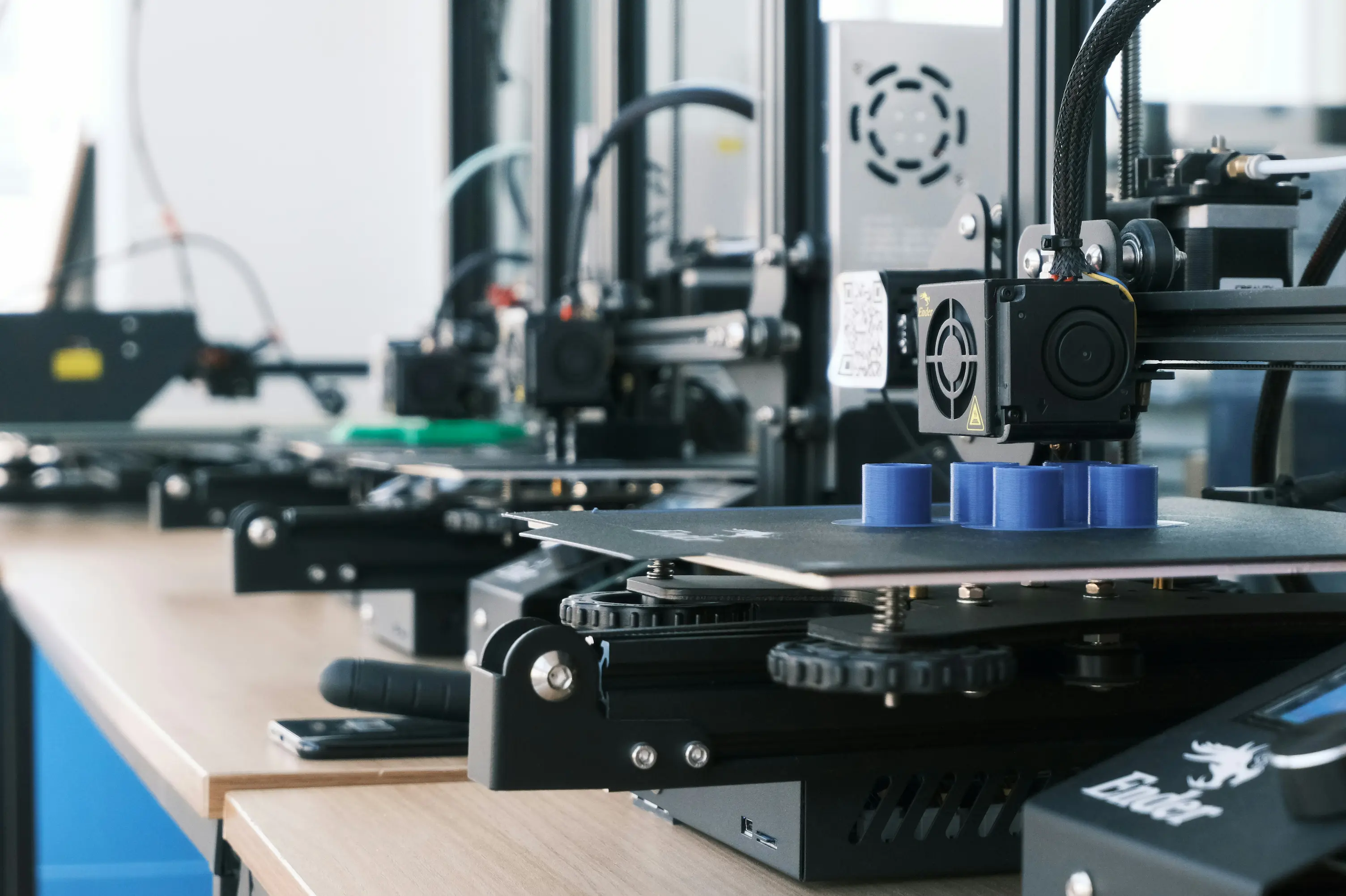
R&D Tax Credits for Additive Manufacturing
A company that has printed the same bracket the same way for multiple years in a row might not feel like it’s doing any research in the same way that a traditional manufacturer that added one metal printer to build a single part in-house may not, but both may be wrong in their assumptions.

Your Project Failed. What Does That Mean For Your R&D Tax Credit?
A failed project may still qualify for the R&D tax credit. The Treasury regulations state that the ultimate success or failure does not automatically qualify or disqualify whether its development costs count as research expenditures. Before you write off a shelved prototype, a scrapped software build, or a formulation that was never launched, find out whether the work behind it qualifies.